

Ever wonder: “Where do things come from?”
Us too.
Open Supply Hub is powering the transition to safe and sustainable supply chains by building the world’s most complete, open and accessible map of global production. Here’s what our team is learning, trying and thinking about along the way.
-
Click to read more…: Meeting the Moment: How Open Supply Hub is Evolving for 2025

Meeting the Moment: How Open Supply Hub is Evolving for 2025
The first half of 2025 has been a whirlwind. AI has fundamentally shifted how we approach supply chain work, global political changes have disrupted NGO funding streams, and supply…
-
Click to read more…: When Every Minute Matters: What a Major Earthquake Taught Us about the Power of Open Supply Chain Data

When Every Minute Matters: What a Major Earthquake Taught Us about the Power of Open Supply Chain Data
When I first heard the news that an earthquake had struck southeastern Türkiye and northwest Syria in February 2023, I was filled with a deep sense of disbelief and sorrow.…
-
Click to read more…: Growing a Cotton Supply Chain Map of the World
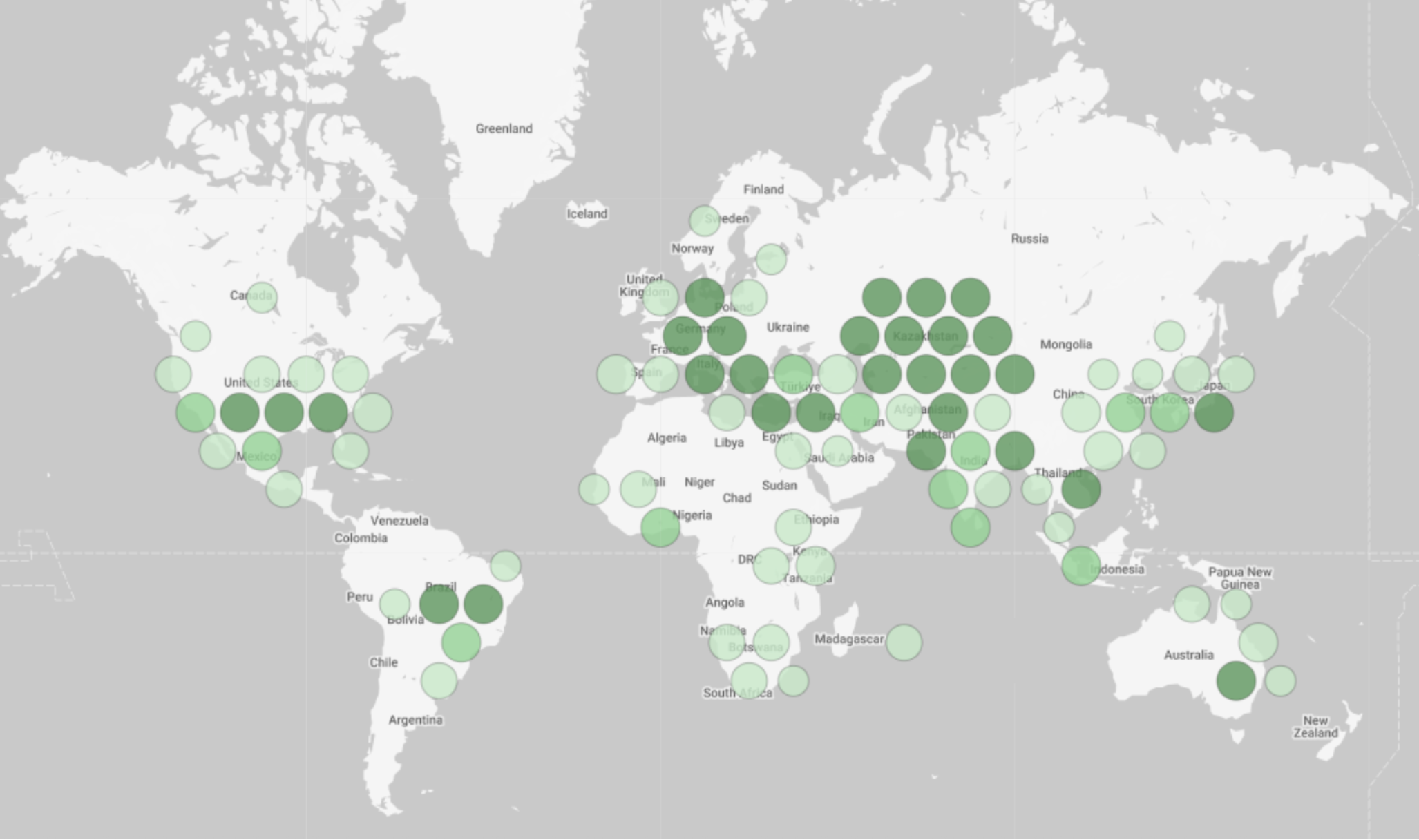
Growing a Cotton Supply Chain Map of the World
Cotton is ubiquitous. It’s in our closets, our first aid kits, our homes, our hospitals, and our supply chains. Breathable, soft, sturdy, and versatile, its fibers are used to make…
-
Click to read more…: Supply Chain Due Diligence: Why Transparency Is Critical to Forced Labor Regulation

Supply Chain Due Diligence: Why Transparency Is Critical to Forced Labor Regulation
Forced labor is a hidden problem within every one of our shared global supply chains. Whether we want to believe it or not, it’s sadly the truth; people are coerced…
-
Click to read more…: Circular Fashion Needs Open Supply Chain Data — Here’s Why

Circular Fashion Needs Open Supply Chain Data — Here’s Why
Circularity is fast becoming fashion’s go-to sustainability strategy. Brands are pledging to use recycled fibers, launch take-back schemes, promote repair, and extend product lifespans. In theory, these efforts could reduce…
-
Click to read more…: Ensuring Suppliers’ Seat at the (Supply Chain) Data Table

Ensuring Suppliers’ Seat at the (Supply Chain) Data Table
What if I told you that you had to start spending half of your year filling out Excel files with the same request for information, over and over? You’d probably…
-
Click to read more…: Unlocking Interoperability Starts with How We Talk about It – A Case Study on the Supply Chain Data Exchange and Open Supply Hub

Unlocking Interoperability Starts with How We Talk about It – A Case Study on the Supply Chain Data Exchange and Open Supply Hub
Supply chain transparency is an ongoing challenge. Organizations and platforms working to make supply chain data more accessible often struggle with interoperability—how to ensure that data from different sources can…
-
Click to read more…: Beyond Corporate Disclosures: How Diverse Datasets Tell the Story of Global Supply Chains

Beyond Corporate Disclosures: How Diverse Datasets Tell the Story of Global Supply Chains
When people think about the supply chain data held by Open Supply Hub (OS Hub), there is often an assumption that it mainly comes from companies disclosing their supplier lists,…
-
Click to read more…: Mapping Supply Chain Locations Affected by the March 2025 Myanmar Earthquake
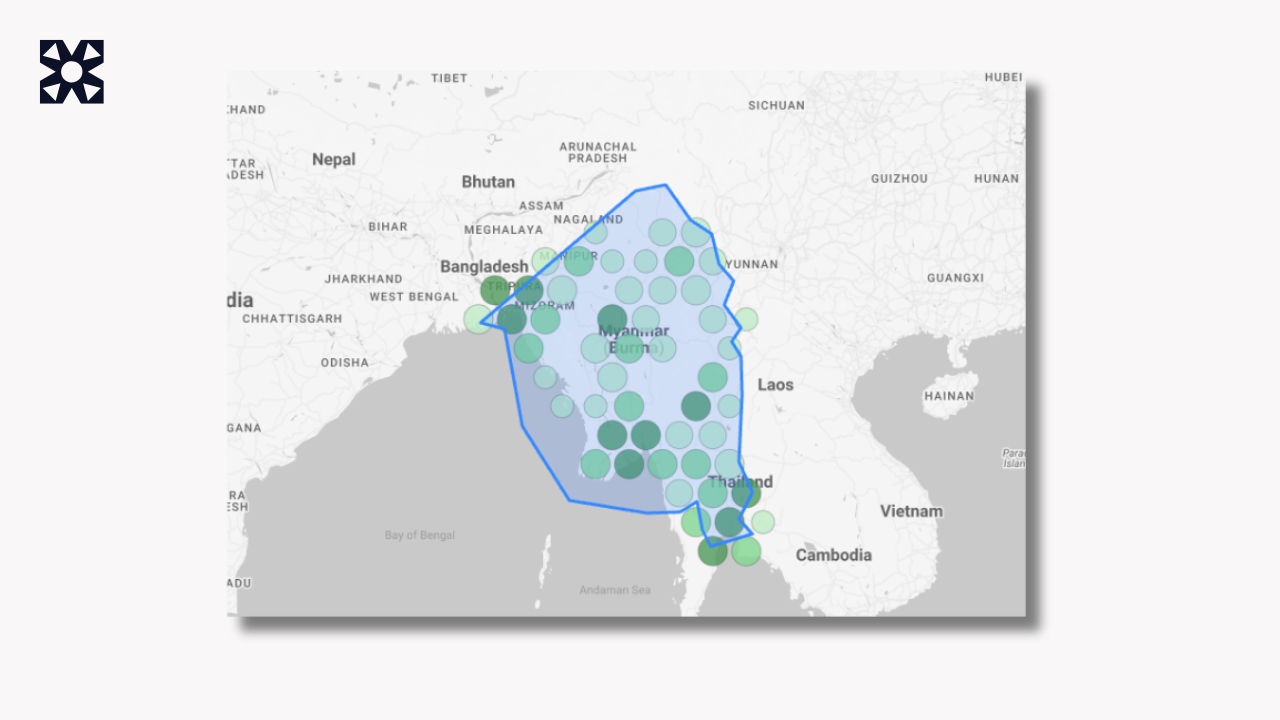
Mapping Supply Chain Locations Affected by the March 2025 Myanmar Earthquake
On March 28, 2025, a devastating 7.7 magnitude earthquake hit Myanmar, with effects felt in countries across the region. If you are looking to understand which production locations were affected*,…
Subscribe to Receive Open Supply Hub News & Updates

Open Supply Hub is established as a 501(c)(3) nonprofit organization, registered in the USA. This site was designed for low energy usage and is hosted on data centers using 100% renewable energy.